

Low-elevation yards are where deck projects go to quietly fall apart.
Not dramatically. Not all at once. Just slowly, season by season, until one spring morning a board feels soft underfoot and you realize the frame underneath has been losing the fight for years.
The short answer: If your yard sits close to grade and holds moisture, a concrete patio, paver patio, or stamped concrete surface will almost always outlast a wood deck at a lower long-term cost. A ground level deck can work, but only under the right conditions, and with the right materials.
Here’s what actually separates a smart outdoor investment from an expensive mistake:
- Ground level decks are built directly above soil, which means trapped moisture, limited airflow, and a structural frame that quietly rots in wet conditions
- Concrete and paver patios sit on a prepared base with no hidden frame underneath, require minimal maintenance, and hold up far better in low, damp yards
- Composite decking improves surface durability over natural wood, but the wooden frame underneath is still the weak link at ground level
- Stamped concrete has closed the aesthetic gap considerably, offering stone, brick, and wood-grain finishes without the upkeep
- Soil type, drainage, and yard elevation matter more than most contractors will tell you upfront
The rest of this breaks it all down, from material cost and resale value to the slow structural failures that catch homeowners off guard.
Why Low Yards Change Everything
A yard that sits close to grade, where the ground is nearly level with your back door, doesn’t give a deck the breathing room it needs.
Moisture builds up underneath low decks like nowhere else. There’s barely any airflow. The soil stays damp longer after rain. Wood sitting in those conditions deteriorates faster than most material cost estimates account for.
The issue is what builders call “ground contact” conditions. Even pressure-treated lumber rated for direct ground contact struggles when it’s consistently sitting in a low, wet environment. Decks tend to fail quietly in these situations, from the bottom up.
This matters for your return on investment, your resale value, and honestly, your safety.
Ground Level Deck vs. Concrete Patio: The Key Differences
Both a ground level deck and a ground level patio create usable outdoor living space. But they get there in very different ways, and those differences matter a lot over time.
A wooden deck is built directly above the ground on a framed structure with posts, joists, and decking boards. Even at low elevation, it has a raised surface, which means stairs, railings, and a frame that needs regular maintenance.
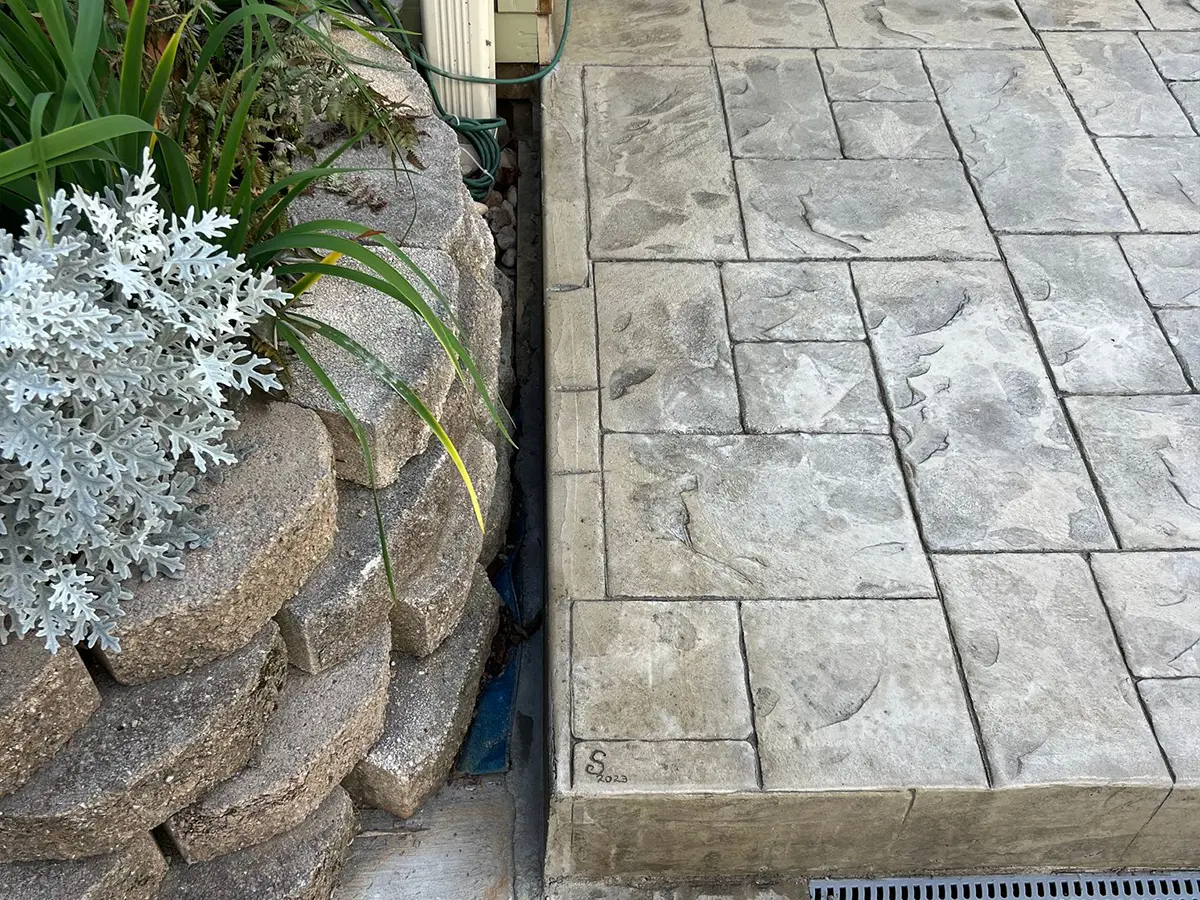
A concrete patio, a paver patio, or a stamped concrete patio sits flat on a prepared base. No frame, no structure underneath to worry about, no stairs unless you want them. It’s a flat surface with seamless integration into the surrounding yard.
Here’s a side-by-side look at how they compare:
| Factor | Ground Level Deck | Concrete or Paver Patio |
|---|---|---|
| Initial cost | Higher | Lower to moderate |
| Long term costs | Higher (ongoing maintenance) | Lower (minimal upkeep) |
| Moisture resistance | Poor to fair at ground level | Excellent |
| Material durability | Depends on wood vs composite | Very durable when properly installed |
| Design options | High (built in seating, levels) | Moderate (stamped concrete, pavers, stone, brick) |
| Maintenance | Regular maintenance required | Minimal maintenance |
| Uneven ground compatibility | Easier to adapt | Requires grading |
| Resale value / ROI | Good when well-maintained | Solid, especially stamped concrete |
| Right choice for wet yards | Rarely | Usually yes |
Why Low Decks Often Fail Long-Term
This is the part that doesn’t come up enough in the deck vs patio vs concrete conversation.
A ground level deck is built directly in the environment it’s least suited for. At low elevation, airflow under the structure is minimal. Soil type plays a huge role, too. Clay-heavy soil holds moisture longer, which means the wood never fully dries out between rain cycles.
Common failure points:
- Rim joists rotting from the outside in, invisible until boards start to flex underfoot
- Post bases corroding where metal meets damp soil or wet concrete footings
- Natural wood decking boards cupping, cracking, and growing mold on the underside
- Ledger boards trapping moisture against the house where the structure connects to the wall
Even high quality composites handle the decking surface well. But the frame underneath, the joists, posts, and structural connections, is still wood in most builds. That’s where ground level decks tend to lose the long-term fight.
The U.S. Department of Housing and Urban Development highlights durable flatwork like concrete as a preferred material for low-moisture-resistance environments in residential construction. There’s a reason for that.
The Honest Case for Concrete, Pavers, and Stamped Concrete
Plain concrete doesn’t rot. Pavers don’t warp. Stamped concrete doesn’t grow mold on its underside.
These aren’t exciting selling points, but they matter enormously when you’re planning outdoor living space that you want to actually enjoy for 20 or 30 years without constant upkeep.
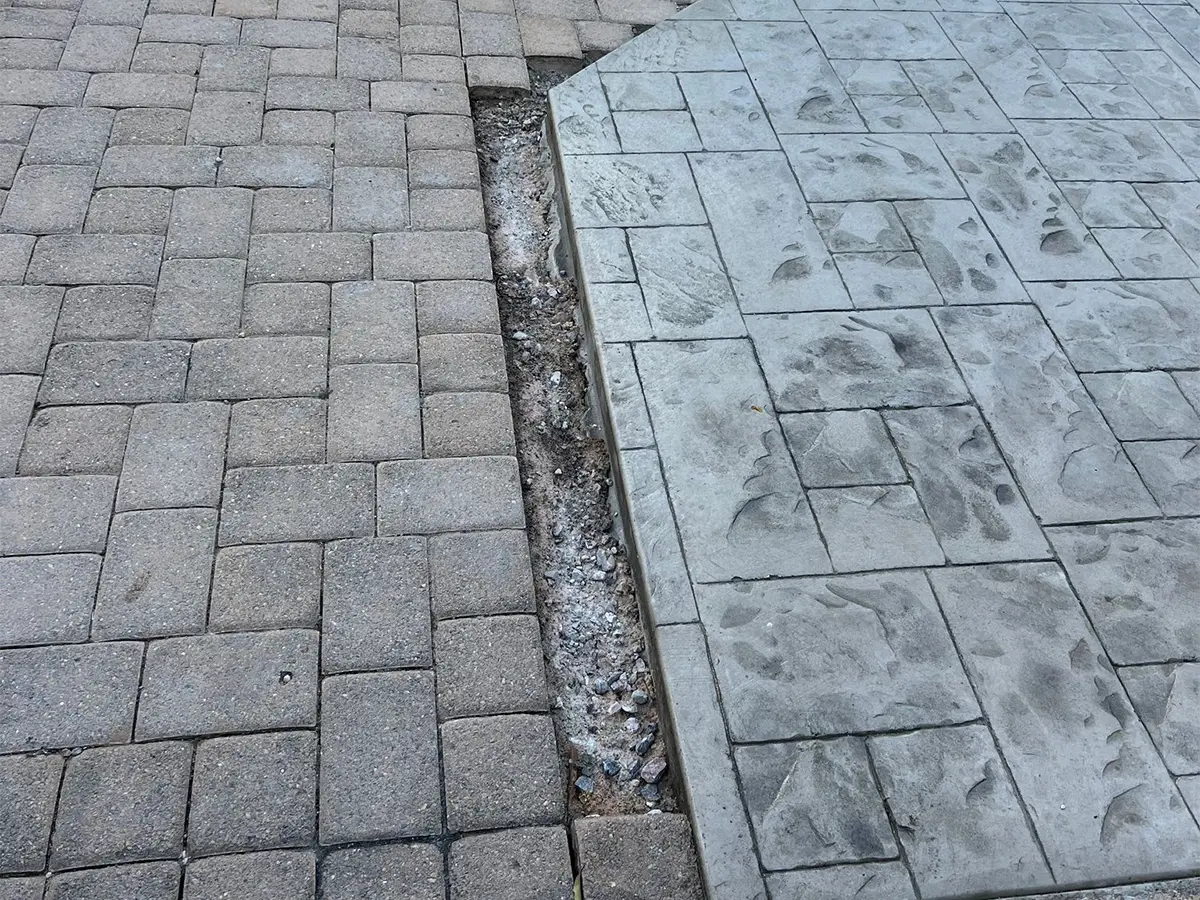
A concrete patio or paver patio sits on a compacted gravel base designed to manage drainage. There’s no frame to trap moisture, no hidden structure to inspect, and no requirement for power washing every season just to keep it looking reasonable.
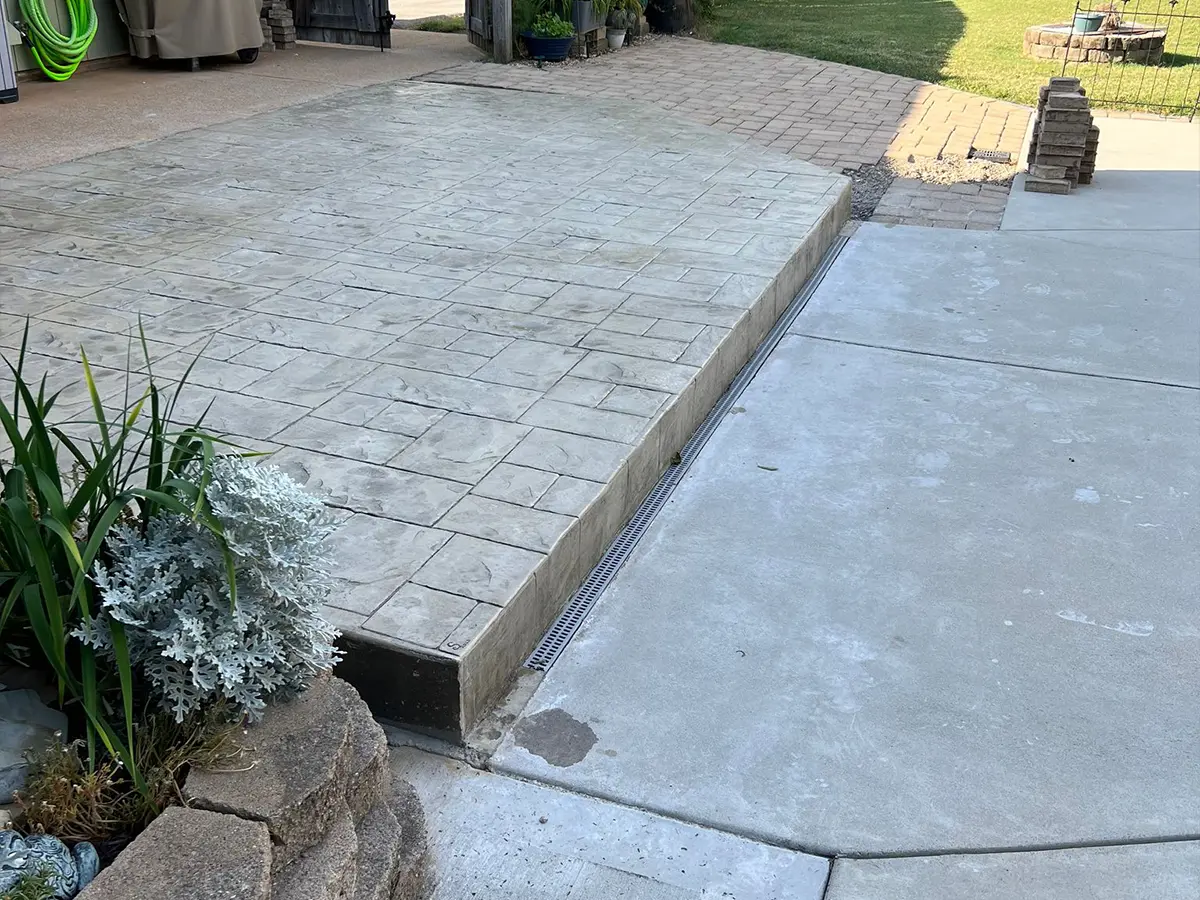
Stamped concrete patios offer more design options than most people realize. Stone patterns, brick textures, wood grain finishes. The aesthetic gap between a stamped concrete patio and a wood deck has closed significantly.
Where patios offer a real advantage over decks at ground level:
- Far less maintenance and lower long term costs
- No structural frame to rot, shift, or require replacement
- Works well on flat ground with proper drainage prep
- Seamless integration with fire pit areas, furniture arrangements, and landscaping
- Material cost is typically lower upfront than a wood or composite deck of the same square foot size
When a Ground Level Deck Still Makes Sense
Concrete and pavers aren’t always the right answer. A deck still makes sense in a few specific situations.
If you’re working with composite decking rather than real wood, the surface itself holds up much better against moisture. The structural frame still needs attention, but the decking boards won’t cup, crack, or require the same level of upkeep as natural wood.
A deck also makes more sense when:
- The soil type drains quickly and the yard dries out fast after rain
- The design calls for built in seating, multiple levels, or a raised outdoor living area that a flat surface can’t achieve
- Uneven terrain or uneven ground makes a flat concrete surface impractical without significant grading or earthwork
- Access to under-deck space matters for storage or utility purposes
If you’re weighing composite vs wood for a ground level build, our blog on composite decking pros and cons breaks down the real differences between high quality composites and natural wood in humid conditions.
And if you’re considering a deck built directly over an existing concrete surface, we covered building a deck over a concrete slab in detail, including what to watch for structurally.
The Slow Failure Nobody Talks About
Ground level decks fail gradually. That’s part of what makes them expensive.
A board starts to feel slightly soft. A post looks fine from above but has been absorbing moisture for two years. By the time the problem is visible, the total cost of repair is often close to the cost of replacement.
The most dangerous scenario is a deck that looks fine on the surface but has structural rot in the frame underneath. At low elevation, inspecting the underside of a deck is awkward and easy to skip. Most homeowners don’t do it until something feels wrong.
Signs your ground level deck may already have a problem:
- Boards that feel springy or soft underfoot
- Graying or darkening on the underside of joists
- Post bases showing rust or white mineral deposits
- Gaps widening between boards from repeated moisture cycles
- Any soft spots near the ledger where the deck meets the house
If anything on that list sounds familiar, an inspection before another season is worth it.
Ground Preparation: Where Projects Win or Lose
Regardless of whether you go with a wooden deck, concrete, or pavers, ground preparation determines whether your outdoor space lasts.
For a concrete patio or stamped concrete patio, that means a compacted gravel base, a proper drainage slope away from the house (typically 1/8 inch per foot), and control joints to manage cracking. Skipping any of those steps leads to puddling, cracking, and a surface that looks rough within a few years.
For a ground level deck, it means digging footings below the frost line. The International Residential Code, which most local building departments reference directly, sets minimum standards for footing depth and structural connections. A deck structure without properly installed footings will shift. That’s not a small problem.
Most deck projects require permits. Many concrete patios don’t, though it’s worth confirming with your local building department before you plan anything. Knowing which projects require permits before you start saves time, money, and headaches.
FAQ
What’s the total cost difference between a ground level deck and a concrete patio?
Per square foot, a basic concrete patio typically runs lower than a wood deck. A stamped concrete patio or paver patio costs more than plain concrete but often less than a comparable composite decking build. Long term costs shift the comparison further toward concrete once you factor in ongoing maintenance.
Does a ground level deck or concrete patio add more resale value?
Both add value, but a well-maintained concrete or paver patio tends to hold its value better over time because it requires less maintenance and shows fewer visible signs of aging. A wood deck that needs work at the point of sale can actually reduce buyer confidence.
Can I add a fire pit area to either option?
Yes, though a concrete or paver patio is generally easier to design around a fire pit. Pavers and stone surfaces handle heat better and create a more natural look. A deck requires specific fire-rated materials and clearance from the structure.
Is power washing enough to maintain a wood deck at ground level?
Power washing helps with surface appearance, but it doesn’t address moisture damage inside the wood or the structure underneath. At ground level, regular maintenance means more than cleaning. It means annual inspection of joists, posts, and connections.
What about paver patio vs stamped concrete?
Both are solid options for a ground level patio. Pavers offer the ability to replace individual sections if cracking or shifting occurs. Stamped concrete offers a more seamless look but can be harder to repair if it cracks. Soil type and drainage conditions often determine which performs better in a specific yard.
Let Someone Else Handle the Heavy Thinking
If going through all of this has you thinking “I just want a nice outdoor space without the research project,” that’s a fair place to land.
The decisions around soil type, material cost, drainage, footing requirements, and long term value aren’t small. Getting them wrong costs significantly more to fix than getting them right the first time. And in a low-elevation yard, the margin for error is smaller than it looks.
For professional guidance on outdoor structures and repairs, take a look at what Braga Buildings covers on their roof repair and outdoor services page. Worth a read before you commit to anything.
Or if you’d rather just talk through your specific yard and what makes sense for your space, call us at (865) 801-4545 or message us here. We’re happy to help you figure it out before a single board or bag of concrete gets ordered.