

Deck Ledger Installation in Knoxville, TN
Riverview Decks | Licensed & Insured | (865) 801-4545 NADRA Member | Google Guaranteed
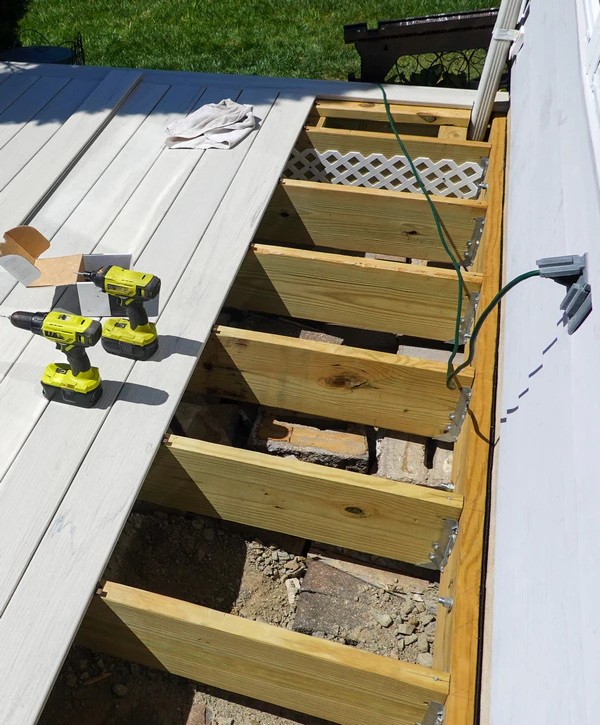
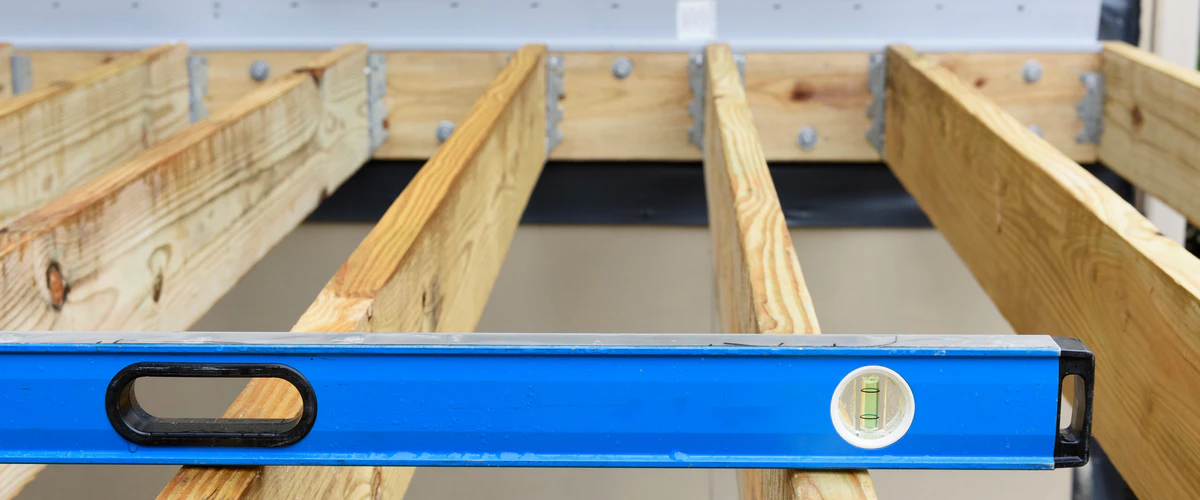
The ledger board is the piece of lumber fastened directly to your home’s rim joist or band joist that carries one end of the deck’s entire load. Every joist on an attached deck hangs off it. If it fails, the deck doesn’t lean or creak; it separates from the house completely, and it tends to do it suddenly. Ledger failures are consistently cited among the leading causes of serious deck collapses nationwide.
Riverview Decks installs ledger boards on new attached decks and replaces compromised ledgers on existing ones throughout the Knoxville area. This is work that requires knowing exactly what’s behind your home’s exterior cladding and building it to the current IRC code
- Premium Materials
- Customizable Design Options
- Transparent, Competitive Pricing
- Dedication to Client Satisfaction
- Full Support and Maintenance Services
- Ongoing Care after Project Completion
What a Ledger Board Actually Does
Most people never think about the ledger until something goes wrong. It’s the board bolted directly to the side of your house that carries one entire end of the deck frame. Every joist hangs off it. All the load from the decking, the furniture, the people, the grill, a Tennessee winter’s worth of ice and snow, a meaningful share of all of it runs through that single connection point into your home’s structure.
When it’s installed right, it’s rock solid. When it’s not, wrong fasteners, wrong spacing, missing flashing, bolted into sheathing instead of actual framing, it becomes the weakest link in the entire deck. Ledger failures don’t give much warning. The deck doesn’t gradually sag or creak more than usual. It separates from the house, and it tends to do it fast. That’s why ledger connections are one of the first things a building inspector looks at, and one of the first things we look at on any deck that wasn’t built by us.
200+
Decks Replaced
+21
Years of Experience
5-Year
Workmanship Warranty
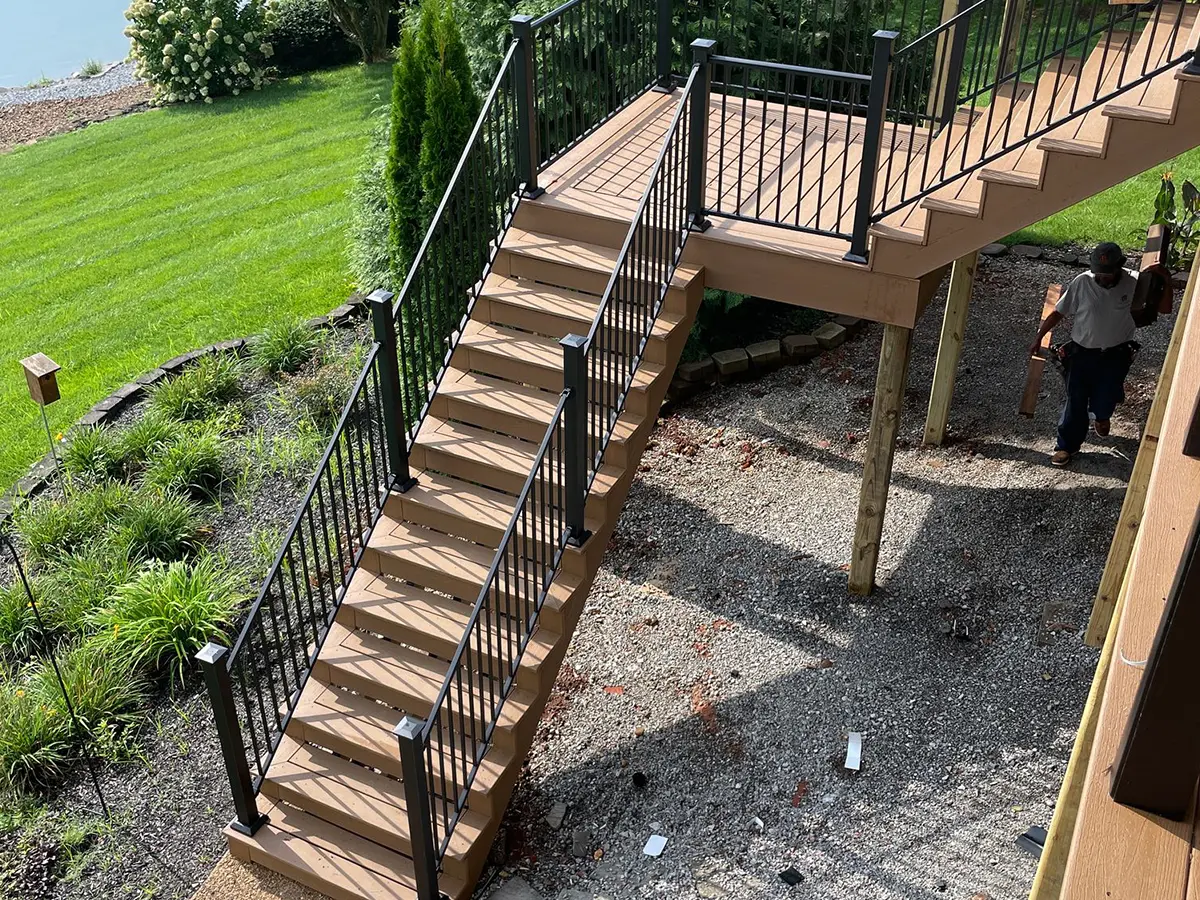
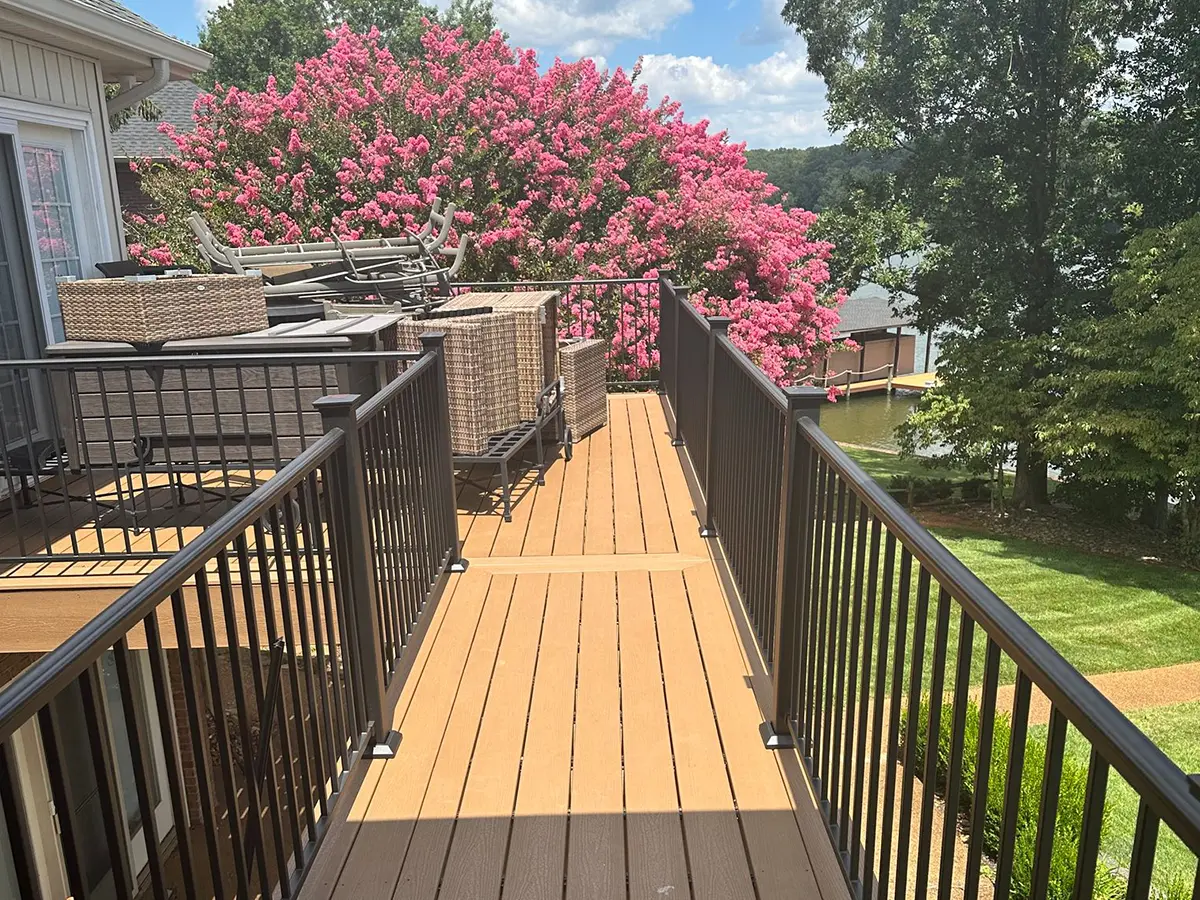
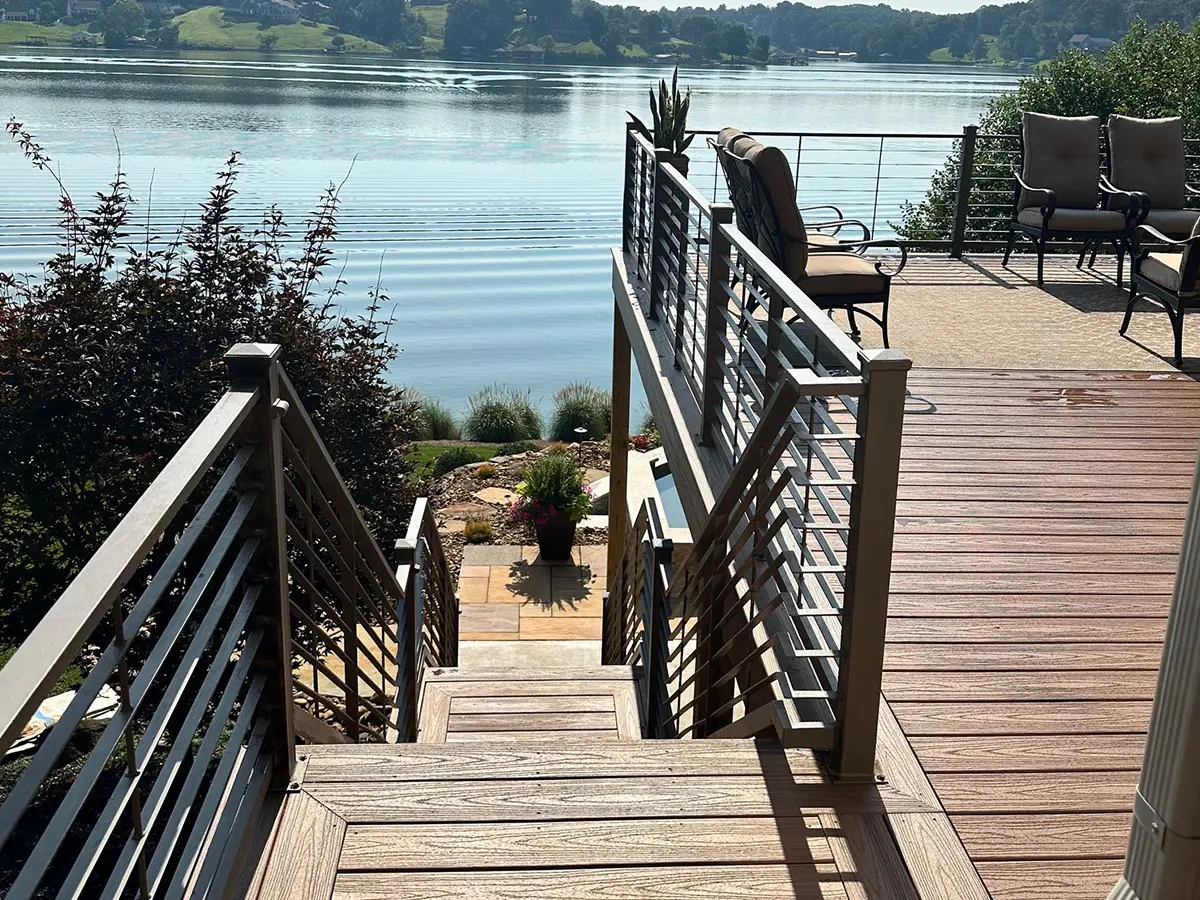
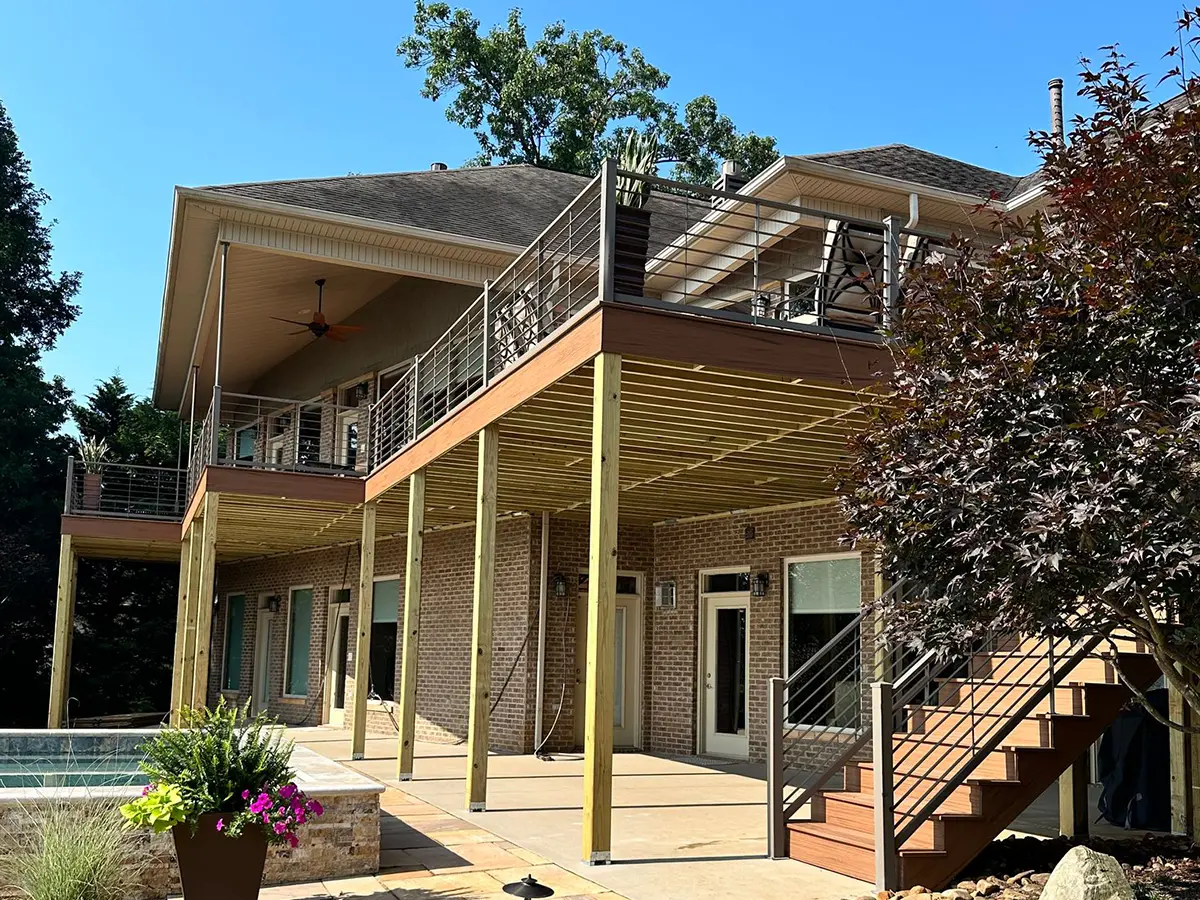
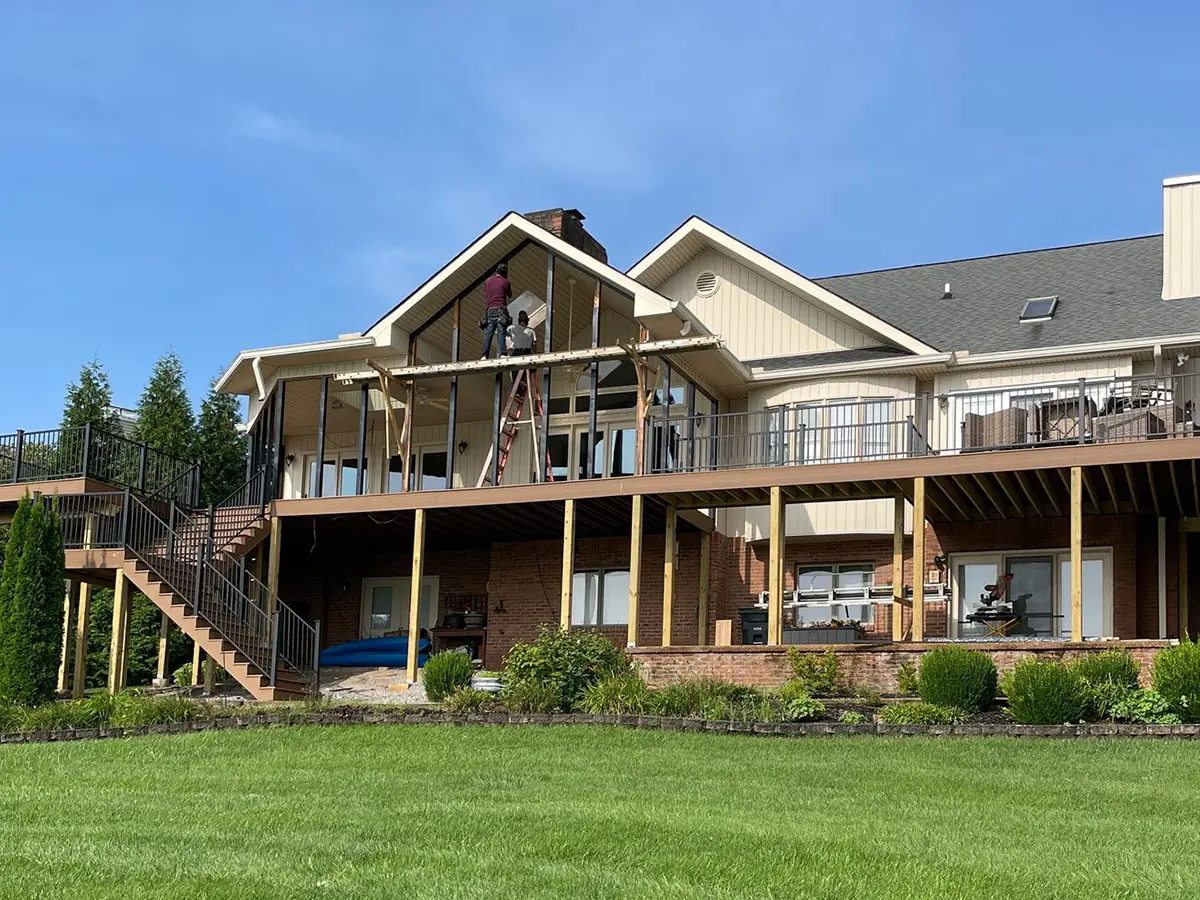
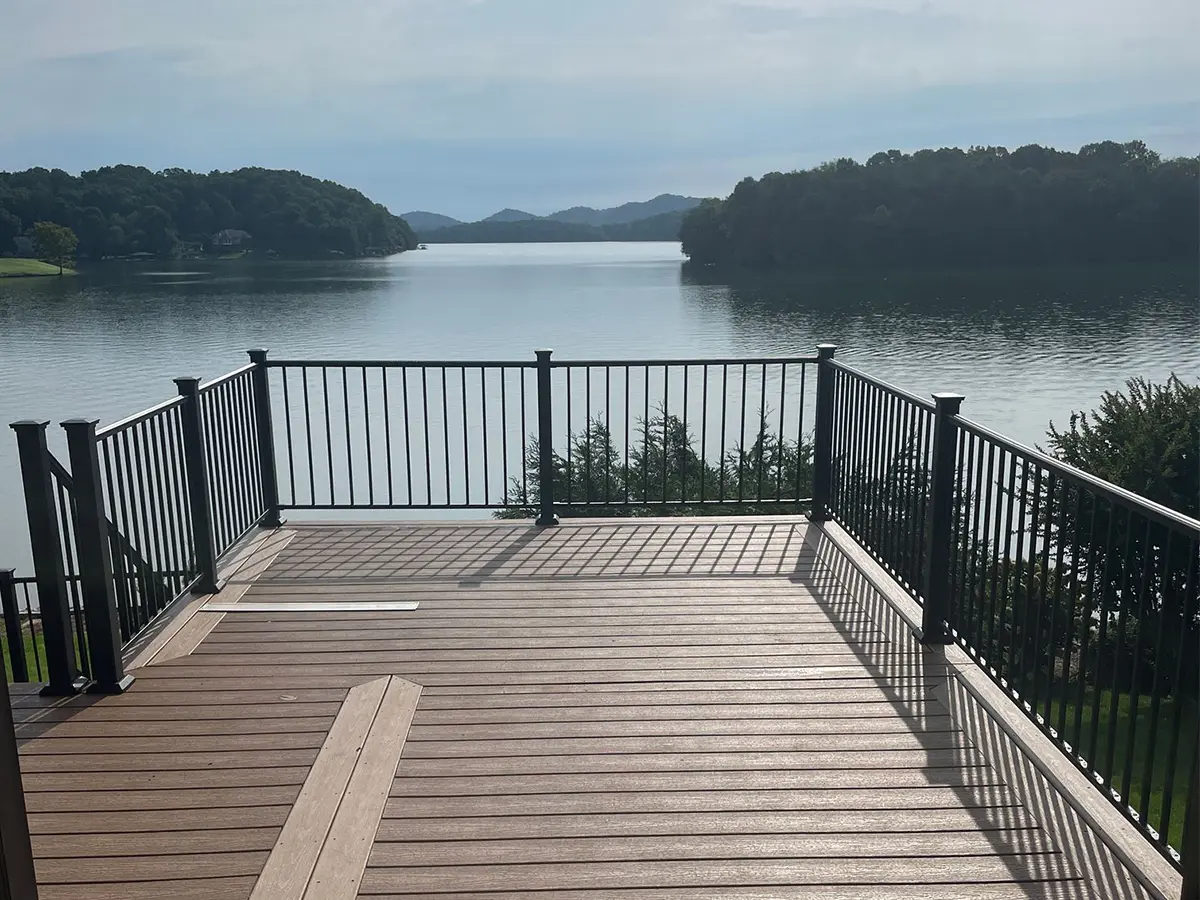
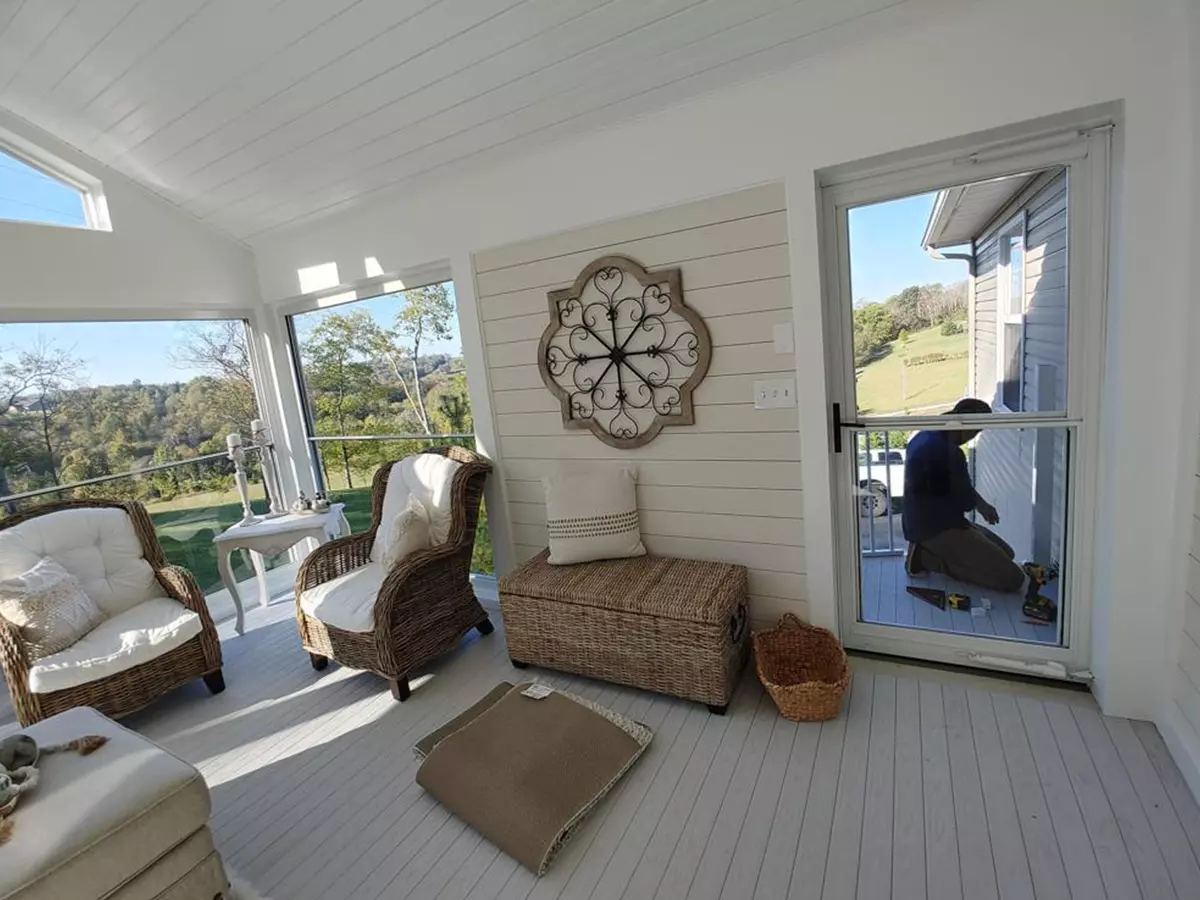
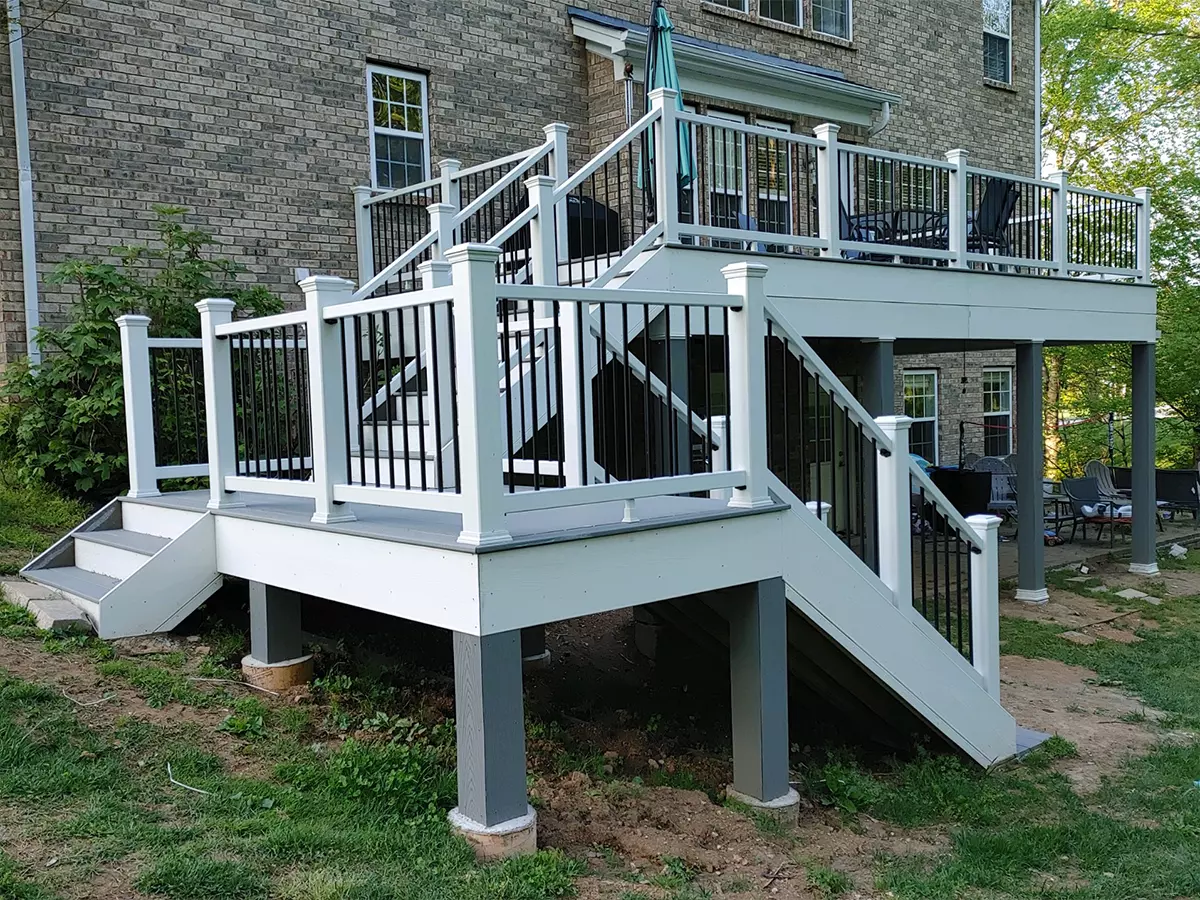
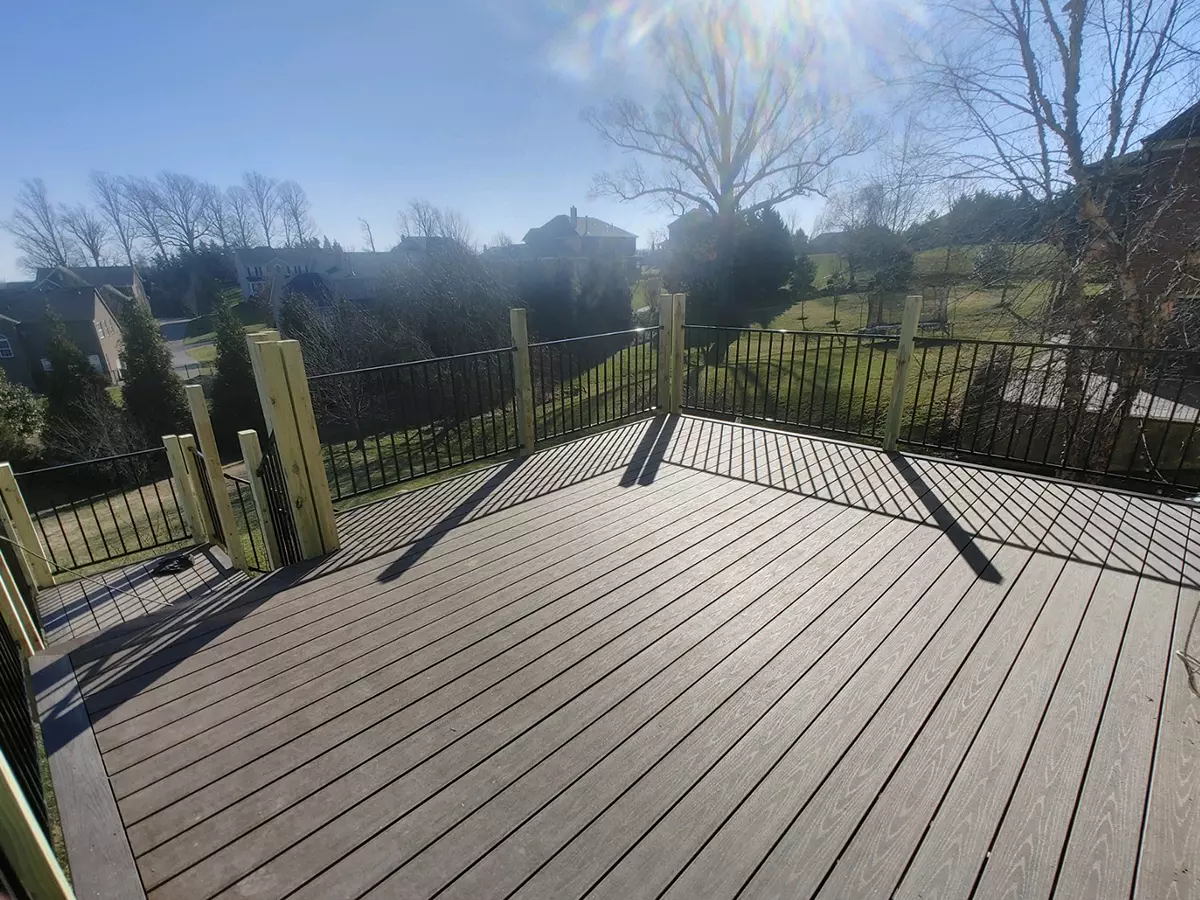
Experience a safer, more stunning outdoor space with our expert deck ledger installation and comprehensive care packages. Protect your home’s exterior—dial (865) 801-4545 to maximize your deck’s potential right now!
What Proper Ledger Installation Involves
- Finding the right attachment point. The ledger has to connect to structural framing, specifically the rim joist or band joist of the house's floor system. Attaching to sheathing, siding, or other non-structural material is a code violation and a serious structural risk. On some homes, particularly those with certain types of cladding or unusual framing, locating the correct attachment point requires opening up the wall assembly.
- Flashing. Water infiltration at the ledger-to-house connection is one of the most common causes of hidden structural damage. Proper flashing directs water away from the gap between the ledger and the house, preventing it from getting behind the cladding and into the rim joist and floor framing. We install Z-flashing or continuous through-wall flashing depending on the wall assembly, and we don't fasten through the flashing membrane.
- Fastener type and pattern. The 2018 IRC specifies fastener requirements for ledger connections by deck width and joist span. Lag screws and structural hex bolts are the standard fasteners, and they need to be sized and spaced correctly based on the load they're carrying. Through-bolting with washers is required in some configurations. This isn't a place to improvise.
- Corrosion-resistant hardware. Because the ledger is in contact with pressure-treated lumber and is exposed to moisture, fasteners need to be hot-dipped galvanized, stainless steel, or specifically rated for treated lumber contact. Standard zinc-plated hardware corrodes prematurely in this application.
- Clearance from siding and cladding. The ledger needs to be properly spaced and sealed from the home's cladding to prevent moisture trapping. On homes with fiber cement, stucco, or engineered wood siding, the installation approach differs from a standard wood-sided home, and getting it wrong creates long-term rot in the wall assembly.
Signs Your Existing Ledger Needs Attention
- A visible gap between the deck frame and the house, or the deck surface tilting slightly away from the house
- Soft, spongy, or discolored wood at the point where the deck meets the exterior wall
- Rust staining running down from ledger fasteners
- Flashing that's buckled, missing, or was never properly installed
- The ledger was attached with nails rather than bolts or structural lag screws
- The deck was built before current code requirements tightened, particularly pre-2000 construction
New Installation vs. Ledger Replacement
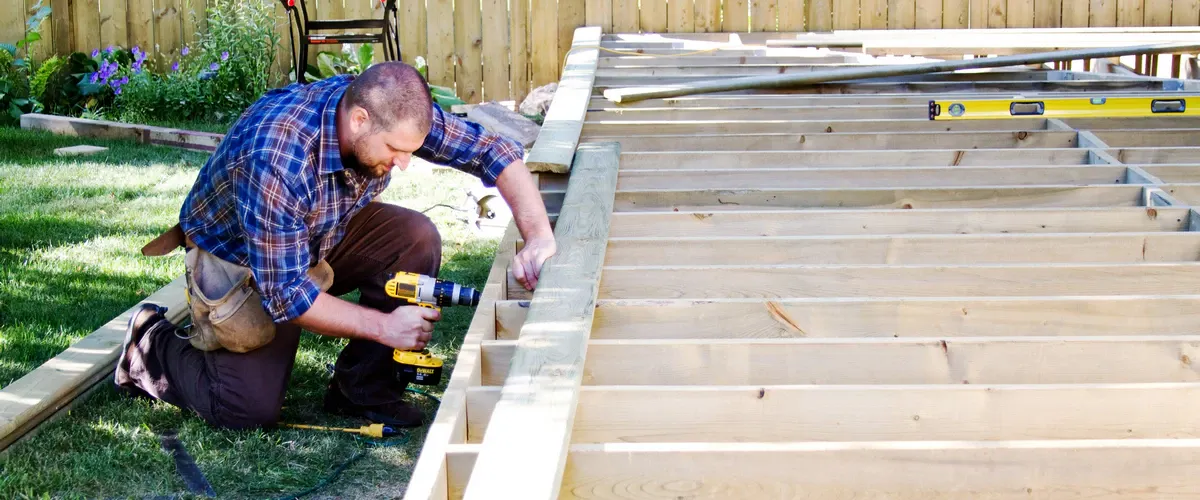
New installation happens when an attached deck is being built from scratch. We locate the correct attachment point, prepare the wall assembly, install flashing, and fasten the ledger to the house framing before any other framing begins. Getting this step right is the foundation of everything that follows.
Ledger replacement happens when an existing ledger has deteriorated or was improperly installed originally. This is more involved because it requires temporarily supporting the deck frame while the old ledger comes out, assessing the condition of the rim joist behind it, addressing any water damage found, installing correct flashing, and reattaching with properly specified hardware. On some decks, ledger replacement surfaces damage to the house’s rim joist that also needs to be addressed before a new ledger goes in.
Costs for Deck Ledger Installation in Knoxville
Straightforward ledger installation on a new build typically runs $200 to $400 depending on the ledger length and wall assembly. Ledger replacement on an existing deck runs higher because of the additional labor involved in accessing and supporting the existing structure, and costs increase further if the rim joist behind the original ledger has water damage that needs repair first.
We provide written quotes after assessing the specific situation. Ledger work is not something we price off a square footage formula without looking at the wall assembly.
K
Kim DiBenedetto
Nate and his team were professional and efficient. We were in constant communication.
I have 3 dogs that the workers were mindful of by keeping the gate closed and not leaving any nails or screws as a hazard.
JC and/or Nate were here everyday to ensure quality and perfection.
There is no one else I would recommend for your deck both new or repairs. I only wish I could give more than 5 stars!
J
Jennifer Axley
Frequently Asked Questions
If you’re building a new attached deck, yes — Knox County requires a building permit, and the ledger connection is inspected as part of that process. Ledger replacement on an existing permitted deck may or may not require a separate permit depending on scope. We’ll tell you what applies to your project and handle the filing.
Possibly, but it needs to be inspected. Unpermitted decks were never subject to the code inspection that would have caught a faulty ledger connection. We can assess the existing installation and tell you whether it meets current standards or needs to be corrected.
A standard new-build ledger installation is typically a half-day to a full day of work. Ledger replacement, especially where water damage is found behind the original board, can run longer. We give you a realistic time estimate as part of the quote.

Nate Burket
Schedule a Consultation
Call (865) 801-4545 or fill out our contact form to discuss ledger installation or replacement at your Knoxville property.
Riverview Decks 620 N Campbell Station Rd #32, Knoxville, TN 37934
Mon – Sun, 7AM to 9PM
(865) 801-4545
info@riverviewdecks.com
Knox County Codes Administration | Online Permit Portal — permit requirements and the online application portal for residential construction in Knoxville.
Tennessee Residential Permits — statewide code requirements for decks and structural additions, including ledger-attached structures.