

You step outside with your morning coffee, ready to enjoy your outdoor living space. But instead of a smooth surface, you’re greeted by warped deck boards that look like ocean waves frozen in place. What happened?
Decks warp for dozens of reasons, and some boards twist more dramatically than others. The difference often comes down to three things: what your deck is made of, how it was installed, and what nature throws at it daily.
What Actually Causes Warping?
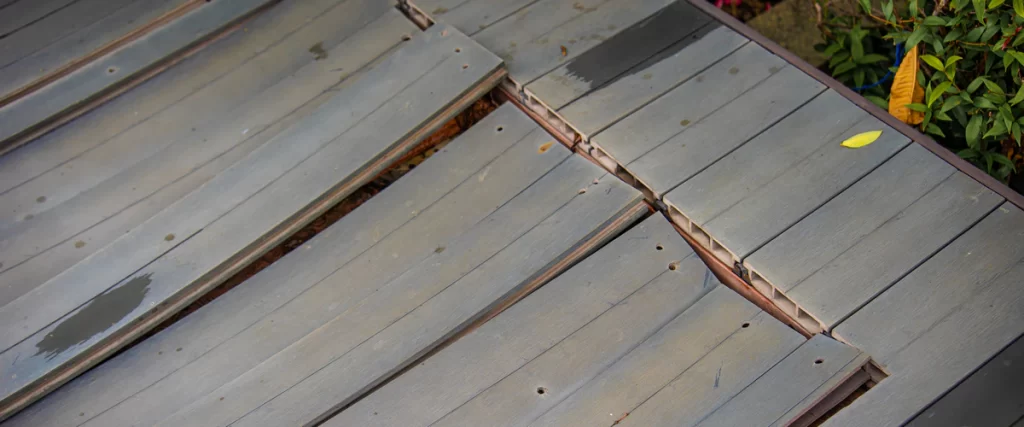
Think of wood as a sponge. When one side soaks up more water than the other, the wet side expands while the dry side stays put. That’s when boards start curling, cupping, or twisting out of their original shape.
Moisture imbalance is usually the villain here. Rainwater pools on top of your deck while the underside stays dry. The top swells, the bottom doesn’t, and suddenly your boards look like potato chips.
But moisture isn’t working alone. UV rays beat down on the surface during direct sunlight, breaking down the wood fibers and making them more vulnerable to warping. Poor drainage means more water stays longer. Uneven drying creates tension inside the wood. It’s a perfect storm of bad conditions.
Natural Wood Decking vs. Composite: The Warping Showdown
| Material Type | Warping Risk | Main Causes | Maintenance Level |
| Pressure Treated Wood | High | Moisture absorption, uneven drying, UV exposure | High (regular sealing required) |
| Natural Cedar/Redwood | Moderate | Less moisture absorption but still vulnerable to sun damage | Moderate |
| Composite Decking | Low to Moderate | Thermal expansion, poor installation, trapped moisture | Low |
| Recycled Plastic Composites | Very Low | Mainly installation errors | Very Low |
Natural wood decking warps more than composite boards because wood is organic. It wants to expand and contract with every weather change. Pressure-treated lumber absorbs moisture like crazy, especially when it’s new. The chemicals that protect it from rot don’t stop it from soaking up water.
Composite decking warp is less common but still happens. These boards are made from wood fibers mixed with recycled plastic, so they handle moisture buildup better than pure wood. They won’t absorb water the same way timber decking does. But they have their own issue: thermal expansion. On blazing hot days, composite deck boards can expand enough to buckle if they weren’t installed with proper spacing.
Common Causes You Can Actually Control
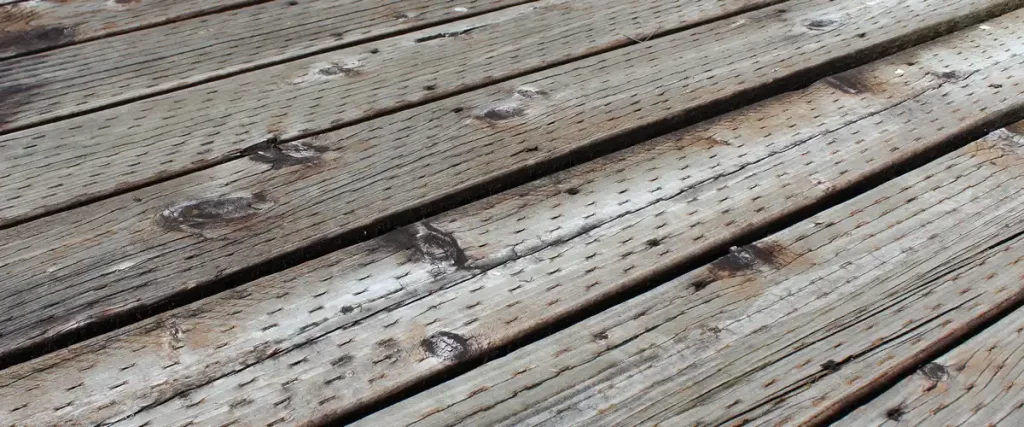
Some warping happens because Mother Nature is relentless. But plenty of it comes from mistakes during the installation process.
Wrong fasteners are a huge problem. If someone used nails instead of screws, or didn’t pre-drill holes, the boards can’t move naturally. Wood needs room to breathe and shift. Lock it down too tight, and it fights back by warping.
Hidden fasteners help prevent this issue when installed properly. They allow boards to float slightly while staying secure. Regular nails or the wrong screws? They create stress points where wood splits or twists.
Here’s what else causes problems:
- Installed poorly spaced boards: Wood boards need gaps between them (about 1/8 inch for treated wood, sometimes more for composite). No space means nowhere for expansion to go except up or down.
- Missing air circulation: When your deck frame sits too close to the ground, air can’t flow underneath. Moisture gets trapped, the underside stays damp, and warping starts.
- Joists placed too far apart: If the frame structure doesn’t properly support the boards, they’ll sag and warp between supports.
The U.S. Forest Products Laboratory (part of the USDA) has published research showing that proper ventilation under decks can reduce moisture content in wood by up to 40%. That’s significant when you’re trying to prevent moisture buildup and keep boards flat.
Early Signs Your Deck Is Starting to Warp
Catch warping early, and you might avoid costly repairs. Wait too lon,g and you’re looking at replacing entire sections.
Watch for these signs:
- Boards that feel springy when you walk on them
- Edges lifting up from the joists
- Cupping, where the edges are higher than the center
- Crowning, where the center humps up higher than the edges
- Gaps appearing between boards where there weren’t any before
- Water pooling in spots that used to drain fine
Minor issues today become extensive damage tomorrow. One warped board puts stress on the ones next to it, creating a domino effect of problems.
Can You Actually Prevent Warping?
Yes, but it takes some effort. Regular maintenance goes a long way.
Start by keeping your deck clean. Remove dirt and debris that trap moisture against the surface. Leaves piled in corners create perfect damp environments for warping to begin.
For wood deck surfaces, apply a water-resistant sealer every 1-2 years. This helps wood boards repel moisture instead of absorbing it like a sponge. Composite boards don’t need sealing, but they still need cleaning to prevent mold growth that can trap moisture underneath.
Proper spacing during installation matters more than most people realize. Those tiny gaps between boards let water drain through instead of sitting on top. They also give wood room to expand on humid days without buckling.
Make sure your deck has adequate ventilation underneath. If the space below your deck looks like a dark cave with poor air flow, you’re asking for trouble. Air needs to circulate so moisture doesn’t build up on the underside of boards.
Check your fasteners annually. Loose screws or nails let boards shift and warp. Tighten them before small movements become permanent warps.
What About Composite Decking?
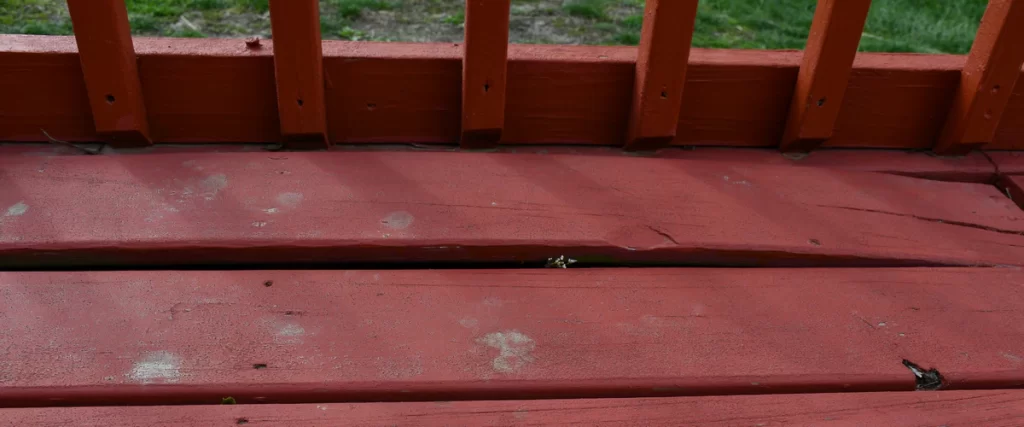
Composite deck boards have their own quirks. They handle moisture better than natural wood decking, but they expand and contract with temperature changes more dramatically.
On a 20-foot composite deck, the boards can expand up to 1/4 inch in extreme heat. If you didn’t leave proper spacing during installation, that expansion has nowhere to go. The boards buckle upward, creating waves across your surface.
Quality materials matter here. Cheap composite boards have more recycled plastic and less wood fiber, which means more thermal expansion. Higher-end composites use better ratios and additives that minimize movement.
Color matters too. Dark composite boards absorb more heat from UV rays, expanding more than lighter colors. If you live somewhere with brutal summers and you chose dark brown composite boards, widespread warping becomes more likely unless you accounted for it during installation.
When Warping Means You Need Repair
Sometimes prevention isn’t enough. Maybe the deck was installed poorly before you bought the house. Maybe you’re dealing with pressure-treated wood that just won’t stay flat no matter what you do.
If boards are lifting more than 1/4 inch from the frame, they’re a tripping hazard. If water pools in new spots, your drainage is compromised. If you see cracks forming along with warping, the structural integrity is questionable.
That’s when repair becomes necessary, not optional.
You can try DIY fixes for single warped boards. Sometimes flipping them over works if only one side is damaged. Sometimes adding extra screws pulls them back down. But if multiple boards across your current deck are warping, or if the warping keeps coming back, something bigger is wrong.
The installation might be faulty. The wood might be of low quality. The frame structure might not provide adequate support. These aren’t problems you fix with a tube of caulk and hope.
FAQ: Your Burning Warping Questions
Q: Can warped deck boards go back to their original shape?
A: Sometimes, if you catch them early. Slight warping can be corrected by adding moisture to the dry side and weight on top, or by securing the board better. Severe warping is usually permanent.
Q: Does composite decking warp less than wood?
A: Generally, yes, but it depends on quality and installation. Composite handles moisture better but can buckle from heat if improperly spaced.
Q: How long before new decks start warping?
A: Pressure-treated wood often warps within the first year as it dries out. Composite boards might warp immediately if installed incorrectly, or never warp at all if done correctly.
Q: Can you prevent all warping?
A: Not entirely. You can minimize it significantly with the right materials, proper installation, and regular maintenance. But some boards will always be more prone to warping than others due to grain patterns and environmental exposure.
Q: Is warping covered by warranty?
A: Depends on the manufacturer and cause. Manufacturing defects might be covered. Warping from improper installation or lack of maintenance usually isn’t.
Maybe Just Let the Professionals Handle It
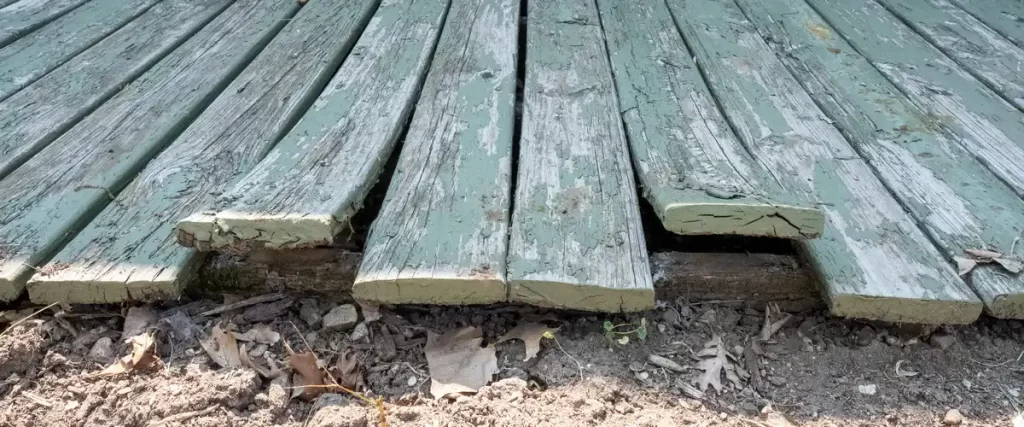
Look, we just threw a lot at you. Material costs, installation techniques, moisture management, and thermal expansion rates. If your eyes glazed over halfway through, we completely understand.
Here’s the reality: fixing warped boards isn’t just about replacing wood. You need to figure out why they warped in the first place. Was it poor drainage? Wrong spacing? Bad materials? If you don’t fix the root cause, those new boards will warp too, and now you’ve wasted money twice.
Professional help means someone who’s seen every type of warping problem and knows how to actually solve it. They’ll inspect your deck frame, check the joists, examine drainage, test for the right materials, and give you honest answers about whether you need minor repairs or a bigger fix.
Sometimes, the most cost-effective choice in the long run is calling someone who does this for a living. You avoid buying the wrong materials, using the wrong fasteners, making the spacing errors that lead to more warping down the road.
If you’re dealing with warped deck boards and want them fixed right, check out our deck repair services to see how we approach these problems. We’ve fixed enough warped decks to know what actually works versus what’s just a temporary patch.
Call us at (865) 801-4545 or message us here, and we’ll take a look at what’s going on with your outdoor living space. Sometimes peace of mind is knowing the job’s done right the first time.