

Winter changes the rhythm of an outdoor living space. Decks that feel bright and open in summer suddenly gather snow, hold onto moisture, and deal with long stretches of freezing temperatures.
The boards stay wet longer, the joists underneath lose the chance to dry out, and meltwater takes its time finding a way through. A deck drainage system makes this season easier on your deck and on everything you keep under it.
Snow settles into small gaps. When the sun comes out and the snow softens, water seeps through the boards.
Then the cold returns and everything freezes again. That slow cycle is tough on any deck. If you understand how winter moisture behaves, you can set up a system that guides water away from the substructure, gives the wood a chance to dry, and makes the area beneath the deck far more usable.
Many homeowners enjoy having a sheltered corner beneath their deck during the colder months. A dry space helps protect stored items and also gives you a comfortable place to set up a chair, a small heater, or a little table for winter gatherings. Once the water is controlled, that space becomes a natural extension of the home.
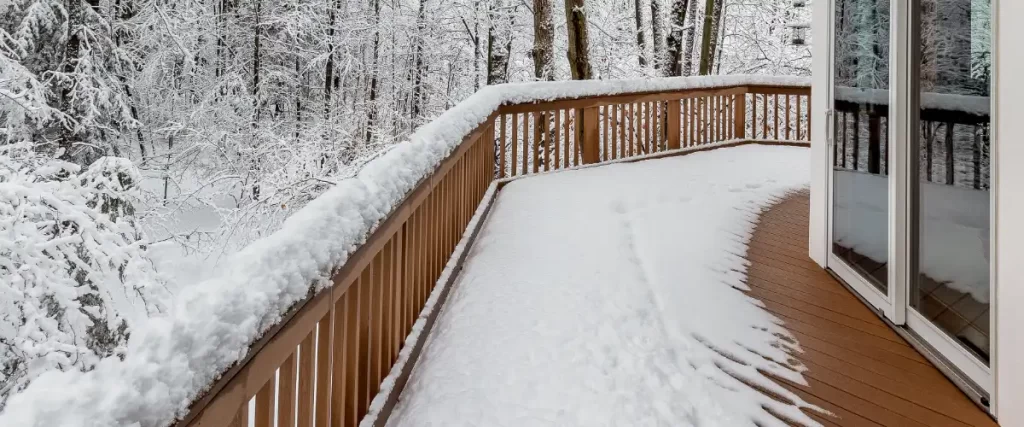
Why Winter Moisture Needs More Attention
Winter creates a different kind of water problem. Snow sits quietly for days, then melts slowly. The meltwater drips straight down, finds the joists, and rests there. The top of the deck may look fine, but underneath, the wood stays moist. Over time, this begins to affect the strength of the structure.
Snow also covers screws and settles into the seams between boards. When temperatures shift, water moves into tiny openings and takes a long time to evaporate. A deck that doesn’t have any drainage support tends to hold onto that moisture, especially in shaded areas.
A well-built drainage system supports your deck through winter because it:
- keeps water off the joists
- gives the wood below a chance to dry between storms
- reduces the chance of long-term decay
- creates a dry area you can actually use
These small changes make a big difference in how a deck holds up year after year.
How a Winter-Ready Deck Drainage System Works
A deck drainage system has a simple job. It collects water before it reaches the framing, then guides it toward the downspouts. Most systems use troughs, tape for sealing joists, and channels that move water away from the beams. The idea is to catch the water early, protect the wood, and lead everything toward the gutters.
One system many homeowners choose is Trex RainEscape. It sits above the joists, which means meltwater never touches the wood below the decking boards. The water flows into troughs, heads down through a network of downspouts, and exits safely. Once the joists are protected, the space underneath becomes a dry, comfortable area you can turn into something useful.
Some families install lighting and ceiling fans under the deck. Others add a small entertainment center or set up a cozy winter seating area. With a finished ceiling and a dependable drainage system, the space feels more like a sheltered outdoor room than an unfinished storage area.
Designing a System That Handles Winter Well
Every home is built differently, which means the drainage system should fit the way your deck sits on your property. Some decks are close to the ground, while others sit high enough that the underdeck area feels like a full room. The height, shape, and age of the deck all play a role in choosing the right approach.
Here are a few things worth thinking about early on:
- how much snowfall your area usually gets
- the pitch or slight slope of your deck boards
- the way you plan to use the space under the deck
- the lighting or features you want to add later
- the lifespan you expect from the materials
Snow melt travels slowly, so the troughs need to be angled and sized to move the water in a steady, predictable way. Many installers place protective tape on top of each joist before the rest of the system goes in. This step helps keep screws in good shape longer and gives the wood a protective layer so it doesn’t absorb moisture.
Once the joists are covered, the troughs go in place. They sit between the joists and collect anything that drips through the deck boards.
From there, the water moves into downspouts and then into gutters or an exit point away from the house. Even on days when freezing rain coats everything, the system keeps the meltwater controlled.
Turning the Underdeck Area Into a Winter-Friendly Space
When the top of the deck is snowy or slick, the area underneath often becomes the most inviting spot outside. A dry, protected space feels warm even before you add any lighting or seating.
Every family uses this space differently. Some set up a small dining corner and enjoy warm drinks under a soft light. Others place a storage bench where things stay dry until spring. Some add a ceiling fan for better airflow, since fans help pull warm air down during colder months.
A finished ceiling makes a big difference. It hides the drainage system and creates a clean, polished feel. Many homeowners choose natural wood tones or brighter ceilings that reflect more light in winter. Once the space is covered, it becomes easier to add lighting, a few hooks for storage, or even a small entertainment setup.
Winter Installation and What to Expect
Installing a drainage system in winter requires a bit of care. The surface needs to be clean and dry so the tape and other materials form a strong seal. Snow, frost, or damp boards can interfere with proper installation. Many homeowners choose to have the system added during the construction of a new deck, although existing decks can still be upgraded as long as the joists are in good condition.
Before the ceiling is added, installers often test the system with running water to make sure everything flows the way it should. This step helps avoid surprises after your first snowfall. Once the flow looks right, the ceiling goes in and the space takes shape.
A carefully installed drainage system protects the framing from long stretches of moisture, which helps the deck last longer. It also keeps the space below clean and ready for whatever use you have in mind.
Keeping Your System Working Through Winter
Snow and wind carry a lot of debris. Leaves collect in gutters, pine needles drift under the deck, and meltwater sometimes carries small bits of debris into the troughs. Simple winter care helps keep things running smoothly.
Most homeowners check:
- gutters and downspouts before the first freeze
- the surface of the deck for leaves and twigs
- the underdeck area for anything blocking the drainage path
A quick sweep is usually enough. Meltwater is steady, so keeping pathways clear makes a real difference in how the structure handles moisture.
Why Many Homeowners Prefer Professional Installation
Installing a drainage system takes patience and an understanding of how decks are built. Winter adds a layer of challenge because materials behave differently in cold temperatures. A professional who works with deck systems daily knows how to evaluate the joists, place the troughs, seal the tape, and angle the downspouts so everything works as one continuous system.
A well-installed drainage system protects the deck and gives you a dry, comfortable place below it. For many families, it becomes one of the most appreciated parts of their outdoor living space, especially in winter.

A Good Way Forward For Your Deck
A deck drainage system gives your deck a better chance against winter moisture. Meltwater moves away from the joists, the underdeck area stays dry, and the space feels more comfortable to use throughout the cold months. Trex RainEscape and similar systems can make a noticeable difference in how long a deck stays strong and how enjoyable the space underneath becomes.
You can take on the installation yourself, although winter conditions make it a slow and careful job. Many homeowners choose to have a team handle the layout, sealing, and testing so the system works the way it should from the beginning.
If you would like help creating a reliable setup for your outdoor living space, call us at (865) 801-4545 or message us here. Riverview Decks handles everything from designing the drainage system to installing it properly, even during colder months. For a closer look at what we build and how we approach new projects, visit our deck building page.