

Cold weather alters the behavior of every deck, especially composite decks. As temperatures fall, composite decking boards contract. When temperatures rise again, composite decking expands. That gentle movement is normal, and every brand of composite materials makes space for it in their installation guides.
Still, winter conditions can make this movement more noticeable. Snow settles on the deck, temperatures swing throughout the day, and moisture sits between boards longer than it does in warmer months.
If you understand how composite deck expansion and contraction in cold weather work, it becomes much easier to protect your outdoor space through winter and keep your deck looking good from season to season.
Composite decking is known for low maintenance, superior durability, and stability compared to wooden decking, yet it still responds to temperature changes. The blend of wood fibers and plastic inside composite boards behaves differently from traditional wood.
Composite materials absorb far less moisture, so their movement primarily results from temperature changes rather than changes in water content. This is why proper gapping, hidden fasteners, and careful installation matter so much in cold climates.
How Cold Weather Affects Composite Deck Boards
Composite decking contracts when lower temperatures settle in. When temperatures rise again, the boards expand. This cycle continues throughout the winter months. The change is small, but it happens every time the temperature shifts.
On a new deck, this can feel surprising at first. Homeowners often notice slight changes in the spacing between boards, or they see tiny shifts around end-to-end joints. These changes are expected. Composite decking materials are designed to handle them, as long as everything was installed with the appropriate expansion gap.
Different brands move a little differently depending on the formula, amount of wood fibres, and density of the composite materials. PVC decking, for example, tends to expand and contract more than wood plastic composites.
Traditional wood behaves differently as well, since wooden boards absorb and release moisture rather than responding primarily to temperature.
Composite boards expand and contract in predictable ways. They grow longer when warm and tighten slightly when cold. If the installation leaves enough room for movement, the deck stays stable.
Why Expansion Gaps Matter So Much
A composite deck depends on proper spacing. The side-to-side spacing, the gaps at the ends of the boards, and even the distance between the boards and nearby structures all need to follow manufacturer guidelines. These tiny gaps help the boards move freely.
When composite decking boards expand without enough room, they press against each other. Over time, this pressure can lead to lifted boards or stress at the fasteners.
In colder climates, tight spacing can cause boards to contract unevenly. Proper gapping helps limit movement and keeps the deck from shifting in ways that affect structural integrity.
Good installers follow the manufacturer’s specifications for gaps, fasteners, and installation temperatures. Most brands recommend installing composite decking during moderate temperatures so the boards do not start at their fully expanded or fully contracted length.
If a homeowner wants to install composite decking in winter, the crew needs to adjust the gapping to match the lower temperatures.
Installation Choices That Help Composite Decking Handle Winter Better
Installing composite decking in cold weather takes planning. The boards are firmer when cold and contract slightly, so the gaps must be measured carefully. Quality composite decking comes with clear instructions that help avoid movement issues.
During installation, contractors often test the board movement by checking:
- the recommended expansion gap between decking boards
- the spacing between deck boards and the home
- the instructions for hidden fasteners
- the guidelines for end to end joints
Composite decking boards expand when warm, so these gaps prevent the material from pushing into other boards or structures. A deck built in summer needs slightly different spacing than a deck built in late fall.
Proper drainage is another important factor. Composite boards shed water well, but the substructure still needs airflow. Good drainage keeps moisture from sitting between the boards for long periods, which helps preserve the framing beneath the composite boards.
How Composite Decks Compare to Wood Decking in Winter
Wooden decking behaves differently. Pressure-treated wood absorbs moisture, releases it, and changes size based on humidity. Cold weather affects wooden boards slowly, through the moisture levels. Composite decking, on the other hand, responds more to temperature. It moves in a cleaner, more predictable pattern.
The lower maintenance needs of composite decking become especially noticeable in winter. Wooden boards need more sealing, more sanding, and more regular inspections. Composite decking only needs simple winter maintenance tips to stay in good shape.
Snow, Ice, and Caring for Composite Decking Through Winter
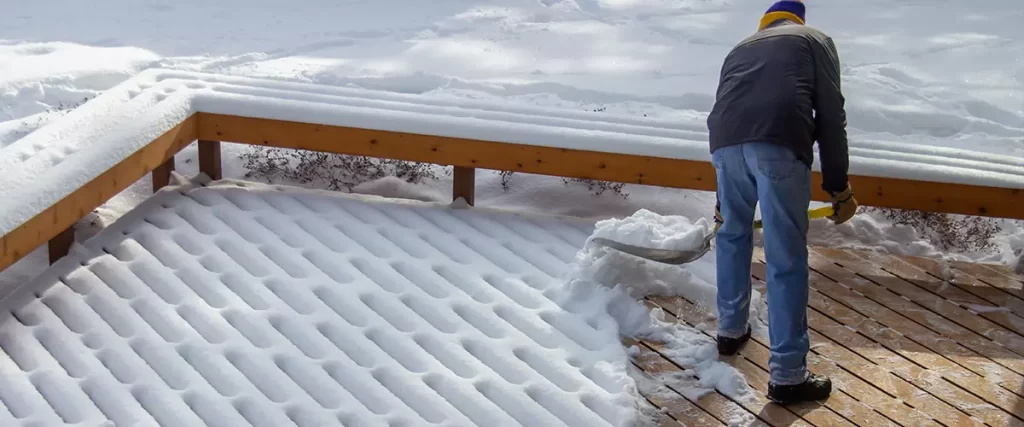
A composite deck can handle winter conditions well, but a little care goes a long way. Removing snow helps protect the surface and gives the deck room to move through natural expansion and contraction cycles.
Most homeowners use a plastic shovel, since metal can scratch or chip the boards. A soft brush works well for light snow. In icy conditions, calcium chloride is often safer than rock salt for composite decks, since it is less abrasive.
Moisture itself does not harm composite decking materials, but keeping snow from piling up helps prevent long-term stress on the substructure and keeps the surface safer for walking. As temperatures rise and fall, the decking expands and contracts more easily when the surface is clear.
Regular inspections during winter are simple yet helpful. A quick check for debris, blocked gaps, or compacted snow between boards helps keep the system working the way it should.
Thermal Expansion and What It Means For Your Deck
Thermal expansion is the natural movement that happens when temperatures change. Composite decking expands in warm weather and contracts when cold weather settles in.
This movement is small but constant. It helps to think of it the way you think of any material outdoors. Everything responds to temperature. The key is giving the decking enough space to move.
If the boards were installed too tightly or if the fasteners do not have enough flexibility, the movement becomes more noticeable. This is why hidden fasteners are so common with composite decks. They allow small shifts that keep the board movement controlled.
In winter, when temperatures fall quickly, this contraction is easiest to see. Homeowners sometimes notice slightly wider gaps between boards. In warm weather, those gaps appear smaller. It is part of how composite materials work.
Keeping a Composite Deck Stable in Cold Climates
A composite deck stays stable in cold climate conditions when it has the right spacing, secure fasteners, and good drainage. Winter brings more moisture, lower temperatures, and slower drying times. A drainage system helps move water away from the boards and gives the substructure a chance to stay dry.
Strong framing also supports the deck during these temperature shifts. Composite decking is heavier than wooden decking, so a good structure helps maintain balance when the material expands and contracts.
If you stay consistent with small winter habits, your composite deck stays in better shape:
- sweep snow gently
- use a plastic shovel instead of metal
- use calcium chloride instead of rock salt
- clean the surface with a deck cleaner before winter arrives
- check gaps to be sure nothing is blocking airflow
These steps take minutes and help limit movement caused by trapped moisture.
A Warmer Take on Composite Decking During Winter
A composite deck brings comfort to an outdoor space even in colder climates. It handles temperature changes well, especially when the boards were installed with care.
Homeowners appreciate that composite decks do not splinter the way wooden boards do in freezing temperatures. They also appreciate that composite decking requires far less winter maintenance than wood decking.
If you ever feel uncertain about how much your composite decking expands or contracts in cold weather, most manufacturers publish detailed guidelines.
These instructions help installers match the right spacing to the right temperature. Following the manufacturer’s guidelines ensures that the deck boards have room to move safely throughout the entire winter.
When You Want an Easier Path
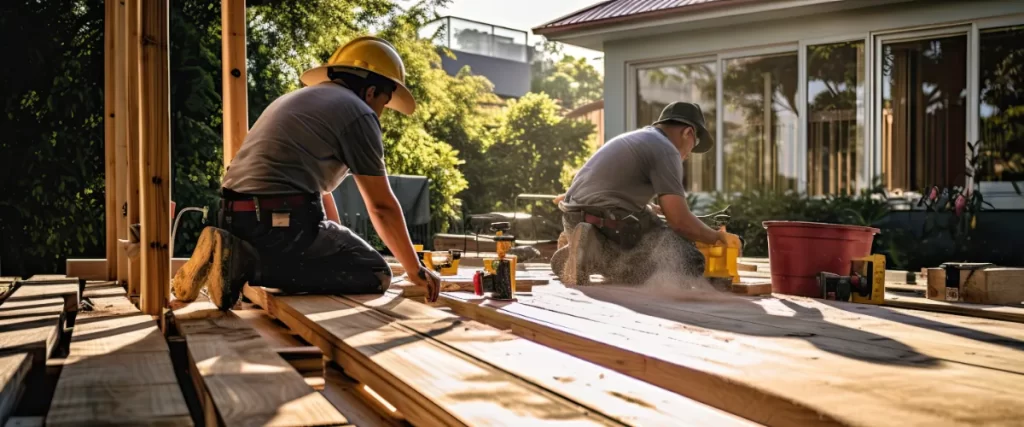
Composite decking is durable, attractive, and dependable through the winter months, yet installing it correctly takes time and careful attention. Tracking temperature changes, measuring proper gaps, choosing the right fasteners, and preparing the framing can feel overwhelming for homeowners building a new deck.
Riverview Decks handles these steps every day. If you would rather have a team manage the installation, the winter planning, and the future movement of your composite deck, call us at (865) 801-4545 or message us here.
For more details about building a new deck or installing composite decking, take a look at the deck building page for more info.